Every year, Indian agriculture waits for the southwest monsoon, which nourishes nearly half of India's cultivated land. It is intimately connected to the behaviour of the global atmosphere–ocean system. Among the most influential of these global phenomena is El Niño, the warm phase of the El Niño–Southern Oscillation (ENSO). Although it begins as an abnormal warming of the sea surface in the central and eastern equatorial Pacific, its consequences extend across continents, influencing rainfall.
The term El Niño, meaning "the Christ Child" in Spanish, was originally coined by Peruvian fishermen because the unusually warm ocean current typically appeared around Christmas. Modern climate science has revealed that this warming is not merely an oceanic event but part of a coupled interaction between the atmosphere and the ocean.
Under normal conditions, strong easterly trade winds blow across the tropical Pacific from South America towards Indonesia and Australia. These winds push warm surface water westward, allowing cold, nutrient-rich water to rise along the South American coast in a process known as upwelling. The warm waters accumulated near Indonesia generate vigorous evaporation, towering clouds, and heavy rainfall. Rising air over the western Pacific completes a vast atmospheric circulation called the Walker Circulation, while cooler, sinking air dominates the eastern Pacific.
India experiences the consequences because the southwest monsoon depends upon a strong temperature contrast between the rapidly heating Indian landmass and the relatively cooler Indian Ocean. During summer, this contrast draws enormous quantities of moisture-laden air from the Arabian Sea and the Bay of Bengal. When El Niño weakens atmospheric circulation over the Indo-Pacific region, the monsoon winds arriving over India often lose strength. The result is delayed onset, prolonged dry spells, reduced rainfall, or poor spatial distribution of rain.
Historically, several severe drought years in India—including 1982, 1987, 2002, 2004, 2009, and 2015—were associated with El Niño conditions. El Niño substantially raises the likelihood of deficient southwest monsoon rainfall.. The agricultural consequences are most severe for the Kharif season, which begins with the arrival of the southwest monsoon in June. Kharif crops depend heavily on timely rainfall because sowing occurs immediately after the first substantial showers. Any delay in the onset of the monsoon postpones sowing, shortens the effective growing season, and exposes crops to moisture stress during critical stages of development.
Rice, India's principal Kharif crop, is especially vulnerable in rain-fed regions. Although irrigated paddy fields are relatively protected, millions of hectares still rely almost entirely on monsoon rainfall. Reduced rainfall affects nursery establishment, transplanting, tillering, flowering, and grain filling. Yield losses become particularly severe if prolonged dry spells occur during flowering.
Other important Kharif crops—including maize, soybean, cotton, groundnut, pearl millet, sorghum, pigeon pea, green gram, black gram, and sesame—also suffer under inadequate rainfall. Oilseed production declines due to moisture stress, which reduces seed formation. Pulses experience poor flowering and pod development. Cotton plants become stunted, reducing boll formation. Rain-fed maize suffers from reduced cob development, while coarse cereals experience diminished grain filling.
The consequences extend beyond the farm. Lower agricultural production reduces rural incomes, suppresses farm employment, and affects industries dependent on agricultural raw materials. Food prices may rise because of reduced supplies of cereals, pulses, edible oils, fruits, and vegetables. Lower reservoir storage affects hydroelectric power generation, drinking water supply, and irrigation for the subsequent Rabi season. Thus, one weakened monsoon can influence economic activity well beyond agriculture.
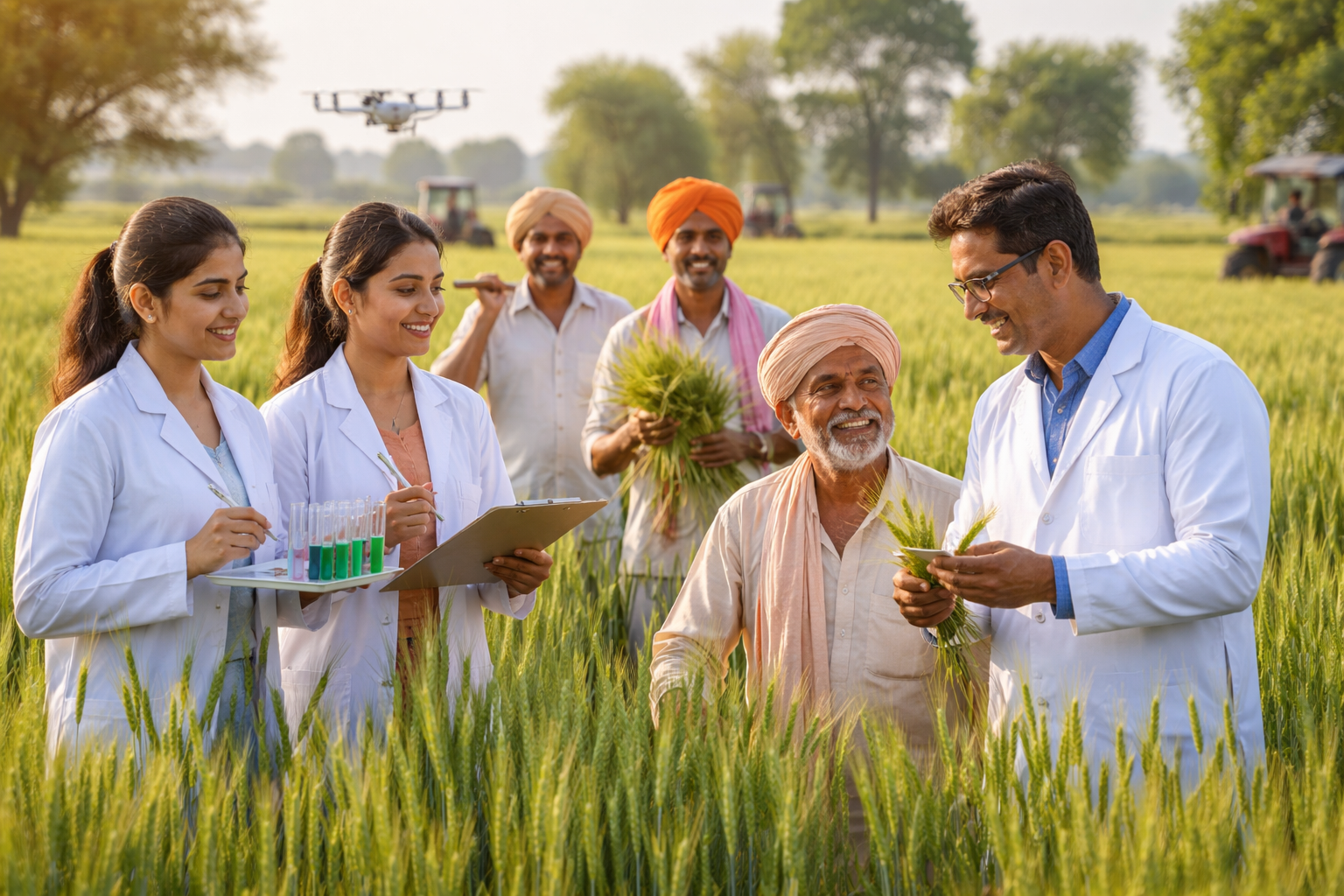
Fortunately, modern agricultural science offers several adaptation strategies. Seasonal climate forecasting by the India Meteorological Department now provides advance indications of ENSO development months before the onset of the monsoon. This allows governments and farmers to prepare contingency plans. Drought-tolerant crop varieties, short-duration cultivars, staggered sowing dates, conservation agriculture, micro-irrigation, rainwater harvesting, farm ponds, watershed development, and efficient reservoir management all improve resilience.
Digital agriculture further strengthens preparedness. Satellite remote sensing, soil moisture monitoring, artificial intelligence, and machine learning now enable district-level advisories on sowing windows, irrigation scheduling, pest outbreaks, and fertiliser management. Crop insurance programmes can reduce financial risks when rainfall is insufficient, while diversified farming systems that combine crops, livestock, horticulture, and agroforestry reduce dependence on a single season.
Ultimately, El Niño reminds us that Indian agriculture is part of an interconnected planetary system. A shift in ocean temperature thousands of kilometres away can alter atmospheric circulation, reshape monsoon rainfall, and influence the livelihood of millions of Indian farmers. Understanding these global teleconnections transforms uncertainty into preparedness. While humanity cannot prevent El Niño, science increasingly enables us to anticipate its arrival, minimise its agricultural impact, and build farming systems resilient enough to withstand the growing variability of Earth's changing climate.
- Dr. Gopal Lal with Prof. Arun Tiwari


0 Comments