Latest Insights from Dr. Gopal Lal
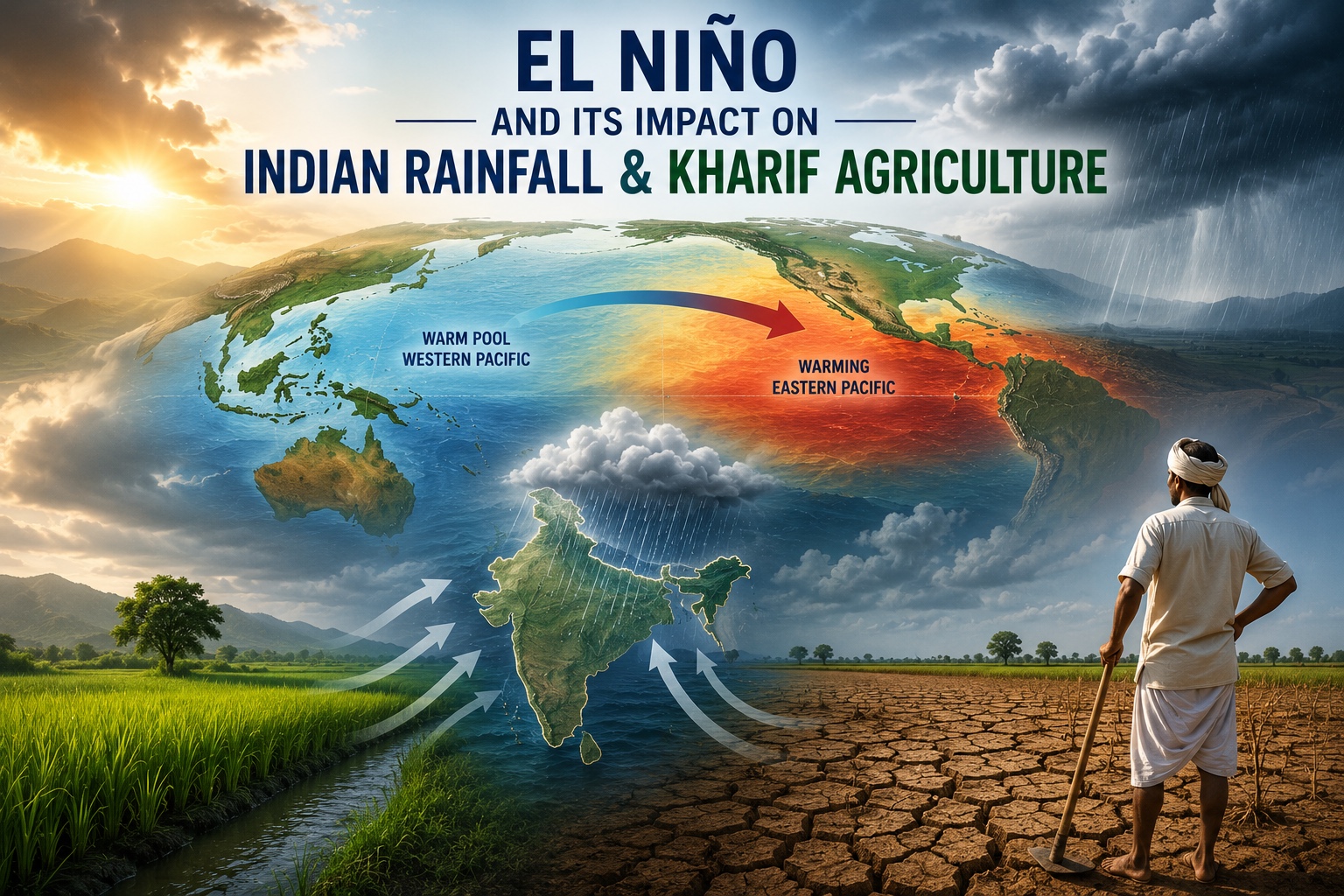
El Niño, the Indian Monsoon, and the Fate of Kharif Agriculture
Every June, nearly half of India’s cultivated land turns its eyes towards the sky. Millions of farmers await the arrival of the southwest monsoon, upon which the fate of the Kharif harvest depends. Yet the destiny of these rains is often influenced by events unfolding thousands of kilometres away across the equatorial Pacific Ocean.
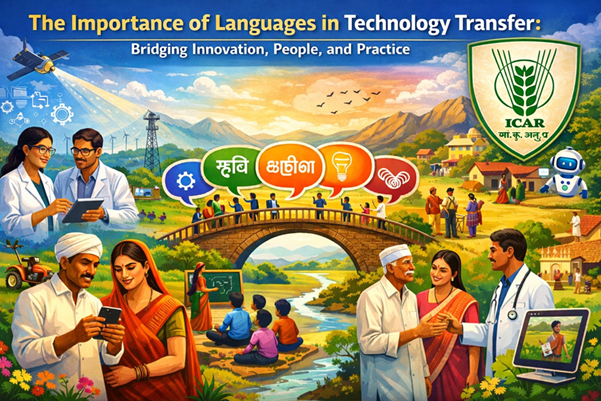
The Importance of Languages in Technology Transfer
In the journey from laboratory to land, innovation alone is not enough—its impact depends on how well it is understood, adapted, and trusted. In a diverse country like India, language plays a critical yet often overlooked role in bridging this gap. This article explores how effective communication—across technical, operational, and cultural layers—shapes the success of technology transfer in agriculture, and why building multilingual, context-sensitive knowledge systems is essential for inclusive and sustainable innovation.

Fields of Play, Fields of Purpose
Amid the precision and routine of scientific institutions, the ICAR South Zone Sports Tournament at Hyderabad—graciously hosted by NAARM—emerges as more than a sporting event. It becomes a vibrant celebration of unity, where laboratories, research stations, and universities converge not in hierarchy but in shared human spirit. For a few luminous days, jerseys replace formal titles, laughter bridges institutional distances, and the diverse agricultural research community of South India gathers on one common field of play. In this convergence of regions, generations, and disciplines, sport quietly renews trust, strengthens collaboration, and reminds the ICAR family that collective well-being is inseparable from scientific progress and national agricultural resilience.
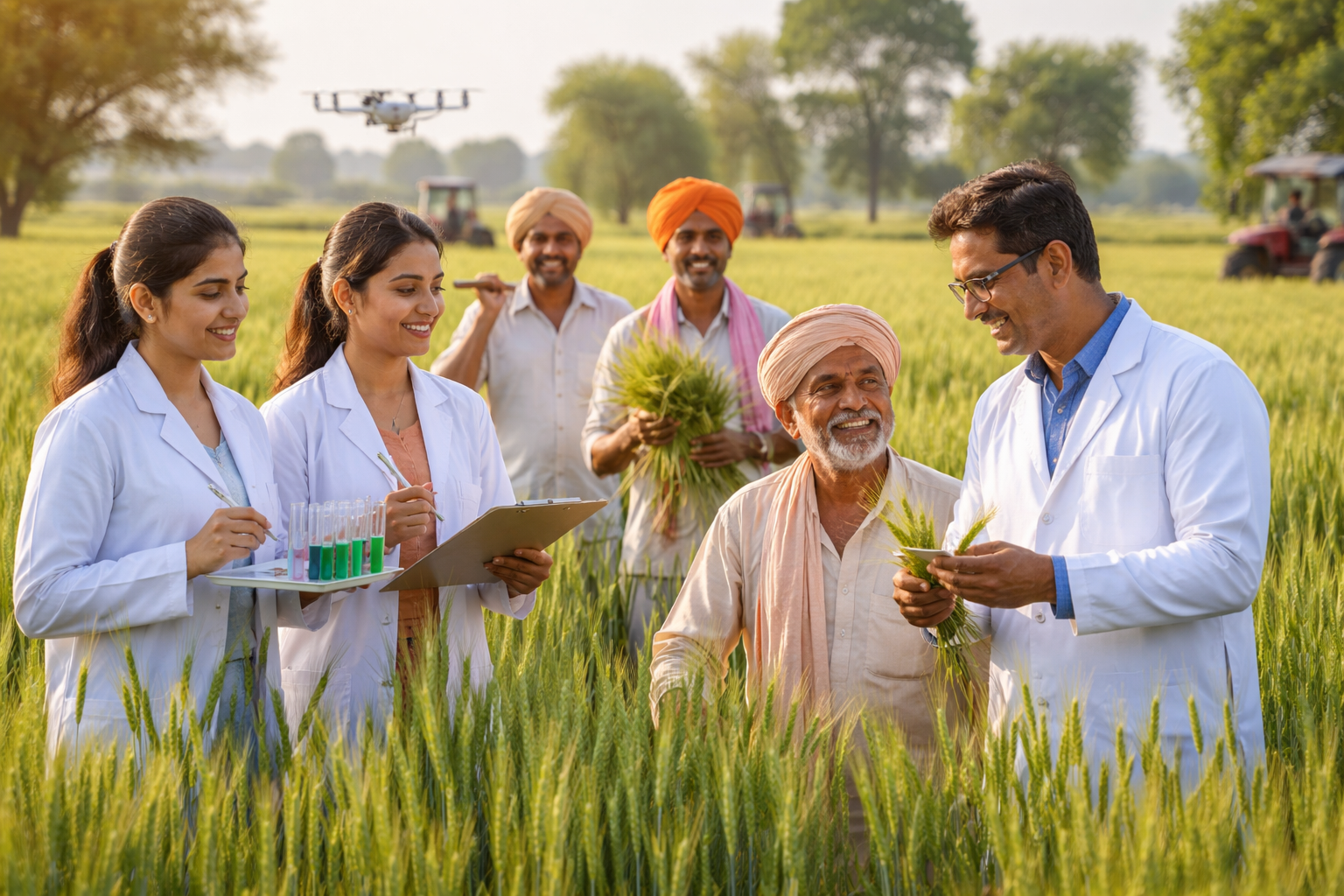
Ring-fence R&D to Make Indian Agriculture Anti-Fragile
India feeds one-fifth of humanity, yet invests barely 0.3–0.4% of its agricultural GDP in research—the very foundation of future food security. As climate stress, soil degradation, water scarcity, and volatile markets intensify, this underinvestment is no longer a budgetary detail but a strategic risk. Treating agricultural R&D as expendable today may quietly erode the resilience India will urgently need tomorrow.
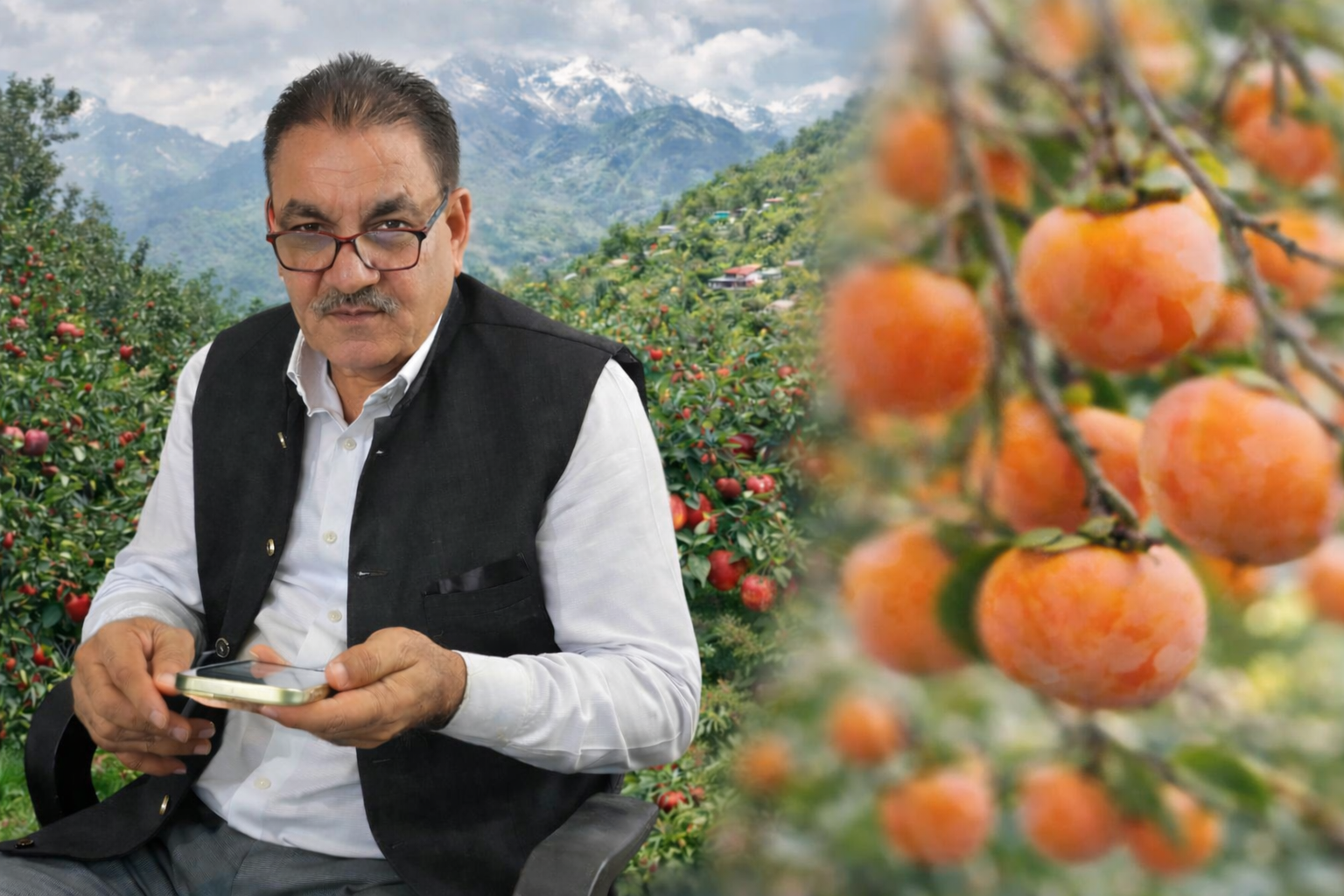
Apples and Persimmons: Science, Shelf Life, and the Wisdom of Sustainable Horticulture
Indian horticulture’s future will not be secured by chasing fashionable fruits, but by strengthening crops that have already proven their ecological, economic, and social resilience. Apples are more than a harvest—they are long-term covenants between science and livelihood, offering storage stability, nutritional balance, and sustained rural income. In an era of climate uncertainty and market volatility, wisdom lies not in novelty, but in nurturing systems that endure.
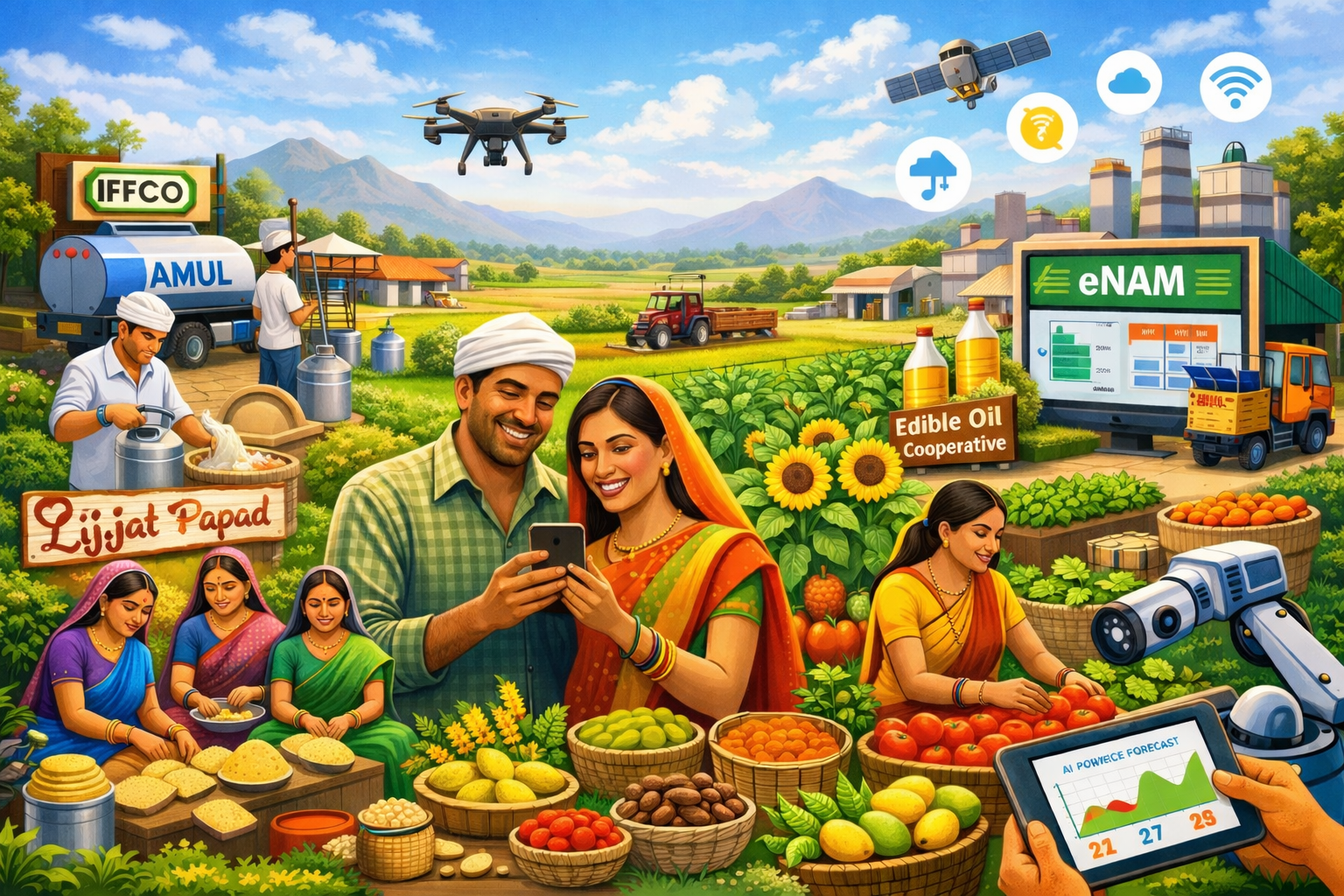
Smart Markets, Strong Villages
Sound market infrastructure is the quiet backbone of a healthy rural economy. In India, the most enduring rural commercial successes—from dairy cooperatives to women-led enterprises—have shown that when markets are designed to serve producers, value is created at scale and shared with dignity. Today, digitalisation and artificial intelligence offer a historic opportunity to extend these principles to sectors like horticulture and edible oils, where fragmented value chains and weak market linkages still limit farmer incomes. By combining cooperative ownership, real-time data, AI-driven forecasting, and local processing, India can build markets that are efficient without being extractive and modern without being exclusionary. A new rural market architecture—rooted in trust, powered by technology, and centred on producers—can turn strong villages into the foundation of a strong nation.
Smart Farming for New India
Precision agriculture in India is no longer a distant promise reserved for large farms—it is rapidly becoming a village-scale reality. Falling sensor and drone costs, expanding micro-irrigation, and the rise of digital agriculture infrastructure are enabling farmers to access data-driven insights without heavy capital investment. With AI-guided irrigation, early stress detection from aerial imagery, and service-based delivery through FPOs and Custom Hiring Centres, precision is shifting from concept to everyday practice—helping conserve water, stabilise yields, and strengthen farm incomes in an era of mounting climate uncertainty.
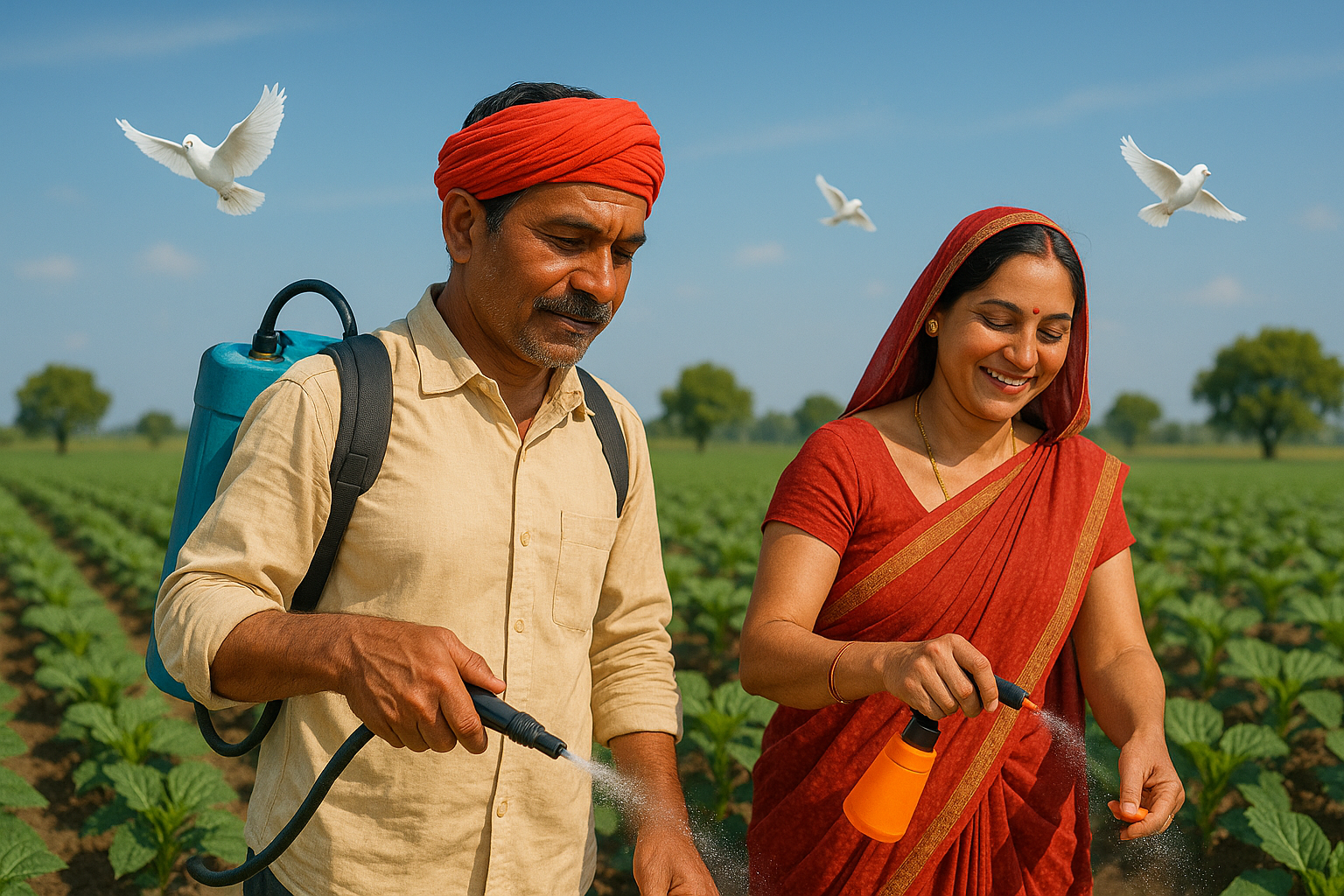
Next Frontier for Nutrient Use Efficiency
A quiet revolution is unfolding across India’s fields. As farmers confront declining soil health, rising costs, and climate uncertainty, liquid manures and precision fertilisers are emerging as powerful tools of renewal. Blending ancient microbial wisdom with modern nano-science, these innovations promise healthier crops, richer soils, and a more sustainable future for millions of smallholders.
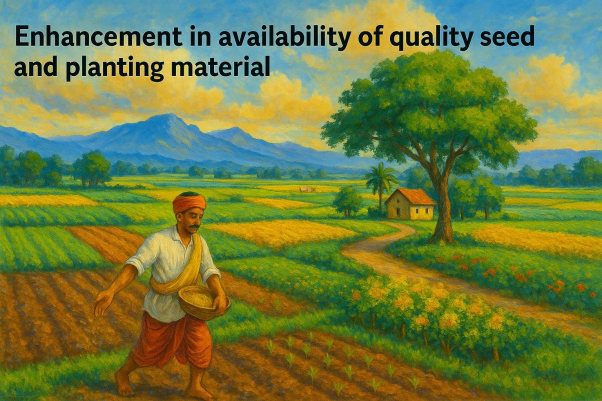
Enhancing the Availability of Quality Seed and Planting Material
Quality seed and planting material lie at the heart of India’s agricultural transformation. From the Green Revolution to today’s push for climate resilience and higher farmer incomes, the power of a genetically pure, healthy, and high-yielding seed has remained constant. Strong legislation, expanding public–private partnerships, rising seed replacement rates, and advances in hybrids, tissue culture, and digital traceability are steadily strengthening the nation’s seed systems. As climate-resilient varieties reach farmers faster and community seed networks grow, a simple truth becomes clear: when farmers begin the season with the right seed, they sow not just crops, but resilience, prosperity, and the future of Indian agriculture.
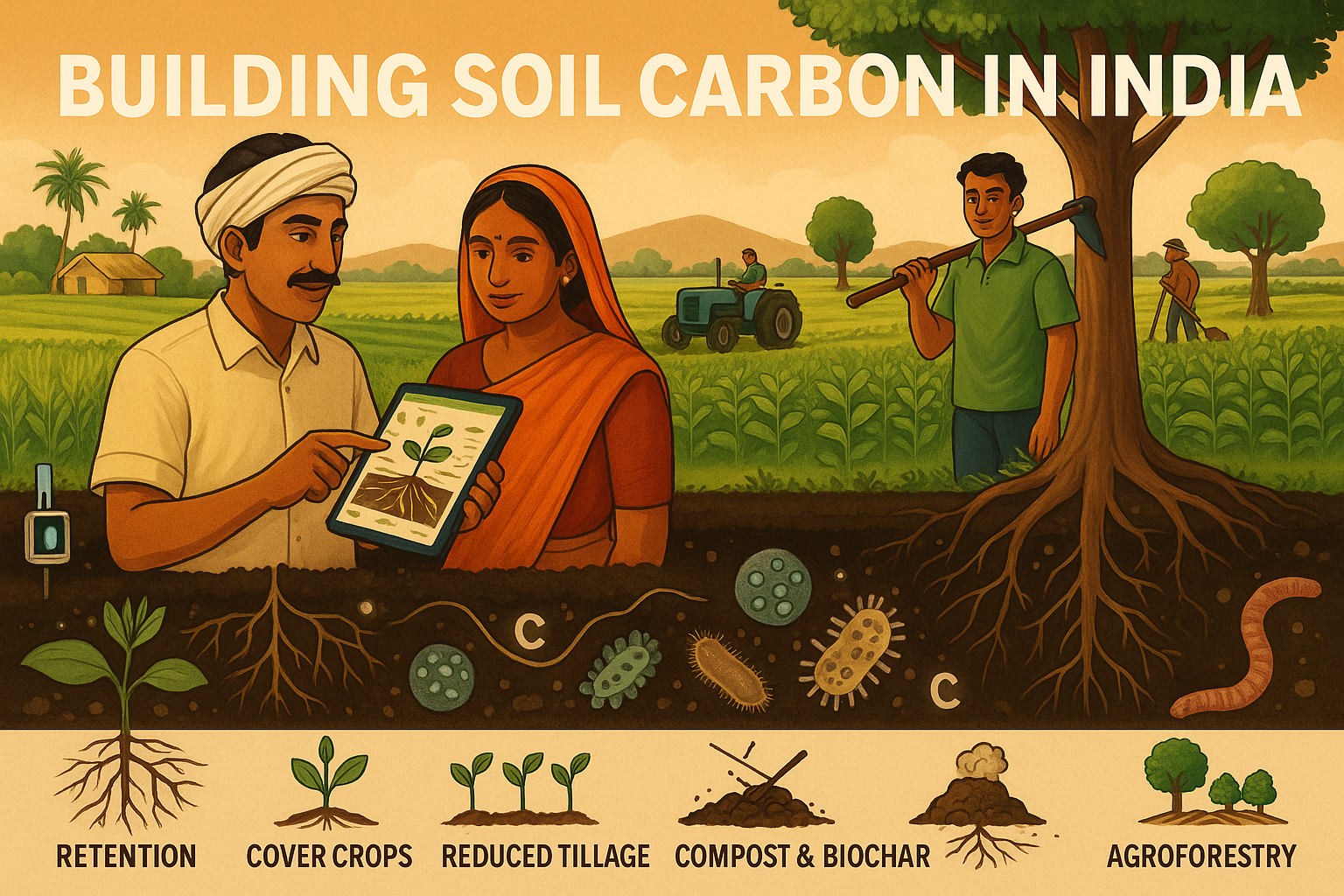
Building Carbon Back into Soil
Indian agriculture’s “half-percent problem”—soils with less than 0.5% organic carbon—sits at the root of weak water retention, poor nutrient efficiency, and fragile yields under climate stress. Rebuilding soil carbon is not about a single input but a systems shift: keeping soils covered, growing deeper roots, disturbing land less, feeding biology, and using technology to measure and reward progress. Raise SOC even modestly, and farmers gain cooler soils, steadier harvests, and lasting resilience.